Tesla Targets Under $30,000 Cybercab Sales by Year-End
The automaker confirmed that private customers can expect to purchase its two-seater robotaxi before the close of 2026, though most units will remain in the company's own fleet.
By Dmitri Sokolov ·
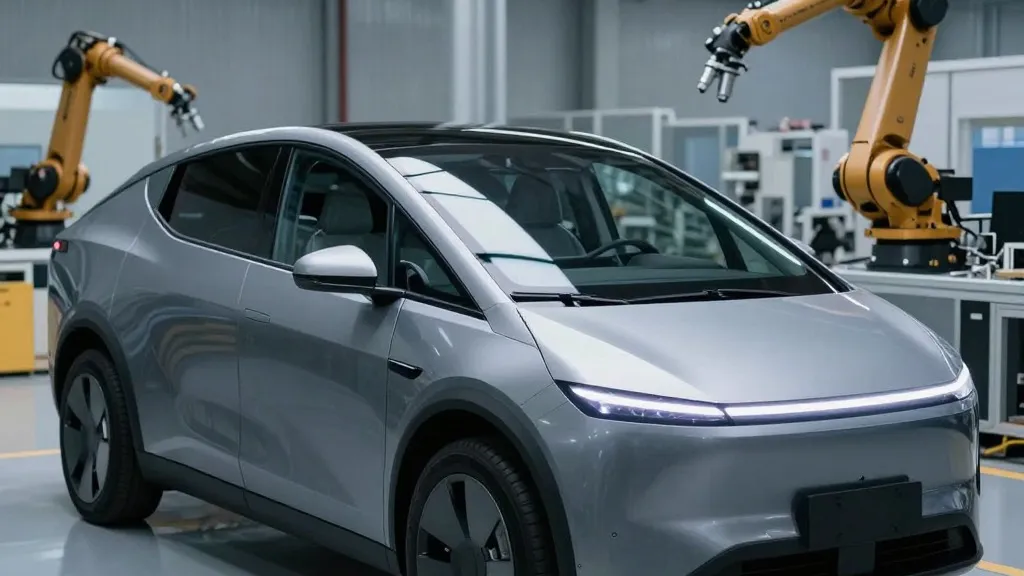
Tesla has established a definitive target price of approximately $30,000 for its purpose-built Cybercab, signaling that private customers may begin purchasing the vehicle before the end of 2026. This figure clarifies the financial expectations for the two-seater robotaxi, which has been under development and initial production for several months. By anchoring the sale price, the company provides a concrete metric for potential buyers and investors alike as the autonomous vehicle transitions from internal testing to broader market availability.
The path to this milestone began in February when production of the Cybercab commenced at Gigafactory Texas. For the initial months, the vehicle was designed specifically for internal use, featuring a cockpit without a steering wheel or pedals and relying entirely on the company's Full Self-Driving suite. By early September, the first units were integrated into the public-facing Robotaxi service, allowing the company to gather operational data and refine its autonomous driving algorithms in real-world conditions. This phased approach allowed engineers to validate the system before considering external sales.
The definitive timeline was announced during Tesla’s third-quarter 2026 earnings call on October 21. Lars Moravy, the company’s Vice President of Engineering, stated that the team is aiming to deliver the Cybercab to external customers before the year concludes. He noted that while production is currently active, all units manufactured are presently allocated to Tesla’s internal Robotaxi fleet. Moravy explained that as operations scale, the company intends to mainly deliver fully designed autonomous vehicles to the public, with the Cybercab serving as the first example of this new category.
Elon Musk, the company’s CEO, reinforced the strategic focus during the same call, describing the Cybercab primarily as a "transport-as-a-service" offering rather than a standard personal ownership vehicle like the Model 3 or Model Y. Musk emphasized that the vast majority of Cybercab units would remain Tesla-owned, suggesting that private sales will be a smaller component of the overall strategy. This distinction highlights the vehicle's intended role within the broader autonomous transportation ecosystem rather than the traditional automotive market.
Looking ahead, the initial wave of customer deliveries is expected to be modest in scale. Moravy indicated that the company will start small to gain experience in delivery logistics, ownership models, and fleet management as it operates autonomous vehicles outside of its direct control. This cautious rollout is designed to mitigate risks associated with handing over fully autonomous vehicles to private owners who may not have the same operational infrastructure as the company's internal fleet.
While the Cybercab timeline is set for year-end, broader autonomous capabilities are also on the horizon. Ashok Elluswamy, Tesla’s Head of AI, indicated that unsupervised Full Self-Driving features are expected to ship to consumer cars during the second quarter of 2027. However, early buyers or fleet operators may face geographically restricted autonomous operations due to the pace of regulatory approvals. These remaining hurdles suggest that while the hardware is ready, the full realization of autonomous ownership will depend on both technological refinement and legislative progress.
Source: Teslarati